









Beta cohort · open to a limited number of companies For subscription software with more customers than CSMs

Your CSMs coveryour top accounts.We run renewals andexpansion for the rest.

Most of your accounts have no rep and no renewal motion, and when one goes quiet, nobody notices until it cancels. We run renewal and expansion plays for all of them, and report retained and expansion ARR against a holdout group your CFO can audit.

Already built an agent that needs babysitting? Get a health check.

Led by Irit Eizips, post-sale revenue advisor to 100+ SaaS companies
LiveRenew & Expand · example accountIllustrative
ARR added$184,200▲ vs holdout
Renewal rate+6 pts▲ vs holdout
Buyers re-engaged38▲ this month
Net revenue retention, long tailWith playsHoldout
Play activity1,284 actions today
Example data for illustration. Not client results.
Scroll

Built on twelve years of post-sale work for 100+ SaaS and software companies, including

Bloomreach logoBlackLine logoGainsight logoIntermedia logoOptimizely logoRedbooth logoSocialTalent logoTalkable logo1-800-DENTIST logoNew RelicSAPHERE TechnologiesVertexWind RiverVeriforceSmartMoving
The coverage gap

Your CSM team can realistically cover a few hundred accounts.

Everyone else renews, expands or leaves without a single conversation. That's a growing problem, because more and more of your growth now comes from customers you already have.

40%

of new ARR now comes from expanding existing customers. That's the median across SaaS companies.

Benchmarkit, 2025 B2B SaaS Performance Metrics (2024 data)
58%

for companies between $50M and $100M ARR. The bigger you get, the more growth depends on the installed base.

Benchmarkit, 2025 B2B SaaS Performance Metrics (2024 data)
65%vs109%

Top-quartile net revenue retention for the lowest-priced accounts (under $10 a month) versus the highest (over $500). The long tail leaks first.

ChartMogul, SaaS Retention Report (2022 data)

Here are the three places that revenue goes unworked.

Unworked revenue · build it yourself, or have it run
01 · Unworked renewals

Renewals nobody works

An annual plan comes up for renewal. No rep owns it, so the only touch is an auto-renew notice, and accounts drifting toward a downgrade never get a conversation. It's booked as churn after the fact, never forecast as ARR at risk.

If your team builds itA CSM builds a renewal-risk agent between QBRs. It works until a billing field changes. Then it stops, and nobody notices.
When we run itEvery renewal 60–90 days out gets a play and a right-sized offer, checked weekly. You see retained ARR against a holdout.
02 · Missed expansion

Expansion nobody asks for

An account hits a seat limit or a usage cap, or invites three colleagues. That's a buying signal. Nobody follows up, so the upgrade waits until they ask, or never happens.

If your team builds itSomeone pipes usage alerts into Slack. The channel fills up, nobody owns the follow-up, and the alerts get muted.
When we run itEach signal triggers a timed upgrade offer. Bigger deals land with your reps as qualified pipeline in your CRM, not in a channel.
03 · Quiet accounts

Customers going quiet

Logins slow down. The power user leaves. The team stops inviting colleagues. Nobody is watching accounts this size, so the first sign anyone sees is the cancellation.

If your team builds itA health score gets built in a spreadsheet or a quick dashboard. It flags 400 accounts, and nobody has time to call them.
When we run itEach quiet account gets a re-engagement play matched to why it slowed down. The ones worth a human conversation go to your team with context.
01 / 03
What your long tail could add

Put in your numbers. See the NRR you're leaving unworked.

$
Extra ARR from the long tail in 12 months
$0
$0retained ARR, of $0 at risk
$0expansion ARR
+0 ptsNRR change for this segment

Example inputs shown. Replace them with yours. Simple model, one year, no compounding. Every rate is your assumption, not a promise from us. The pilot's job is to measure the real number against a holdout.

Why it stays unworked

Building the agent is the easy part. Nobody owns the number.

AI made building cheap. Running what you built is another job entirely, and the people who've done it say so.

These agents require daily attention.

SaaStr built its own AI VP of Customer Success and cut human customer-management hours by 70%. It also reports constant regressions and a Salesforce integration that disconnected twice in the first week.

“Top 10 Learnings From Building Our Own AI VP of Customer Success ‘Qbee’,” SaaStr, May 2026
JLJason LemkinFounder, SaaStr
Most AI in customer success never makes it off someone's laptop.

His example: a prototype built in Claude that had to become a containerized Azure application, behind a VPN and enterprise single sign-on, before it could reach the customer data it needed.

“Why Most AI in Customer Success Stays on a Laptop,” AI Customer Success Brief podcast, Ep. 1, June 2026
JKJeff KushmerekFounder, Infinite Renewals
Less than one percent of everything our customers build clears that bar.

The bar is software that's load-bearing for the customer's business. Lovable's answer was to add deployment sessions and forward-deployed engineers to its post-sales team.

“The Scoreboard Changed,” Customer Success Meetup, October 2026
MPMonica PerezGlobal Head of Customer Success, Lovable

Quotes are from public articles and podcasts, linked above. They describe the authors' own experience and are not endorsements of CSM Practice.

Option A

Buy another tool

You get
Retry logic, cancel flows, journey builders
Missing
Someone to run the plays every week and tie them to renewal and expansion revenue
Owns the number
Your already-stretched team
Option B

Hire an agency

You get
A build and a handoff deck
Missing
Running it after go-live. Results drift once they leave
Owns the number
Nobody, after go-live
Option C

AI for your CS team

You get
Copilots and agents that make CSMs faster
Missing
Your CSMs still only cover top accounts. The long tail stays unworked
Owns the number
CS, for accounts they already cover
Option D

Build it yourself

You get
A working agent in days. AI made the build cheap
Missing
Month three: broken integrations, drifting prompts, no holdout, no owner
Owns the number
Whoever built it, on top of their day job
CSM Practice

We run it

You get
Renewal and expansion plays for every account with no rep, run and tuned every month
Missing
Nothing for you to staff. You approve; we run it
Owns the number
Us, reported as retained and expansion ARR vs holdout

Drag or scroll sideways →

Already built something that needs babysitting?

If your team is running its own agents or apps for renewals, upsell or outreach, we'll review them, take over the ones worth keeping and retire the rest. Your people go back to their customers.

Get a health check →
What opens up for your team

Stop building agents. Get back to your customers.

Right now, some of your best customer people spend their weeks building and babysitting AI. Here's what changes when we run it for you.

01

Your CSMs get their week back

No more nights fixing prompts, chasing broken integrations or rescuing an agent someone else started. That time goes back to the conversations only a person can have: the at-risk executive, the renewal that needs a champion, the account that's ready to grow.

02

Every customer gets attention, not only your top few hundred

Accounts below the line stop renewing on autopilot. They get a timely, relevant reason to stay and grow. When one is ready for a real conversation, it lands on a rep's calendar with the context already there.

03

A revenue number leadership trusts

AI stops being a cost line nobody can defend. Just 21% of customer success teams connect their AI measurement to revenue outcomes. You get retained and expansion ARR, measured against a holdout, every month.

ChurnZero, 2026 Customer Revenue Leadership Study (580 CS and revenue leaders), October 2026
How it works

Diagnose. Launch. Operate. Prove it monthly.

We start where the money is easiest to count, then expand only where the data earns it.

STEP 1 · DIAGNOSE~4 weeks

Size the unworked revenue

We read your billing, CRM and product data and put a dollar figure on renewal risk and expansion signals across accounts with no owner.

  • Renewal risk and expansion signal analysis
  • Data check: can we trust your usage and billing signals?
  • Baseline and holdout design
  • Business case in NRR and expansion ARR
STEP 2 · LAUNCH~8–10 weeks

Build the engine

We connect to your stack and launch the plays, starting with the one that pays back fastest.

  • Billing, CRM and messaging integrations
  • Rules where rules are safer, AI where it adds lift
  • You approve every customer-facing message
  • Larger expansion opportunities go to your reps as qualified pipeline in your CRM
STEP 3 · OPERATEMonthly

Run, test, report

We become your outsourced long-tail revenue team, and we do the daily attention so your team doesn't have to. No new hires on your side. Already built something? We take it over instead of starting again.

  • Monitoring, error handling, agent quality review
  • Regression checks whenever an integration or model changes
  • Continuous A/B tests and play tuning
  • Monthly revenue report: retained ARR, expansion ARR and long-tail NRR vs. holdout
Holdout-measuredA control group gets nothing new. Lift is the gap, not a correlation.
You approve the wordsNothing customer-facing ships without your sign-off.
Kill switch per playAny play can be paused in minutes.
Your data stays yoursIsolated client environments, role-based access, audit logs.
Your reps come firstYou set the account-size line. Above it, signals go to sales; below it, we run the play.
The first module

Renew & Expand

Most of your customers will never get a call from a rep. We put a renewal and expansion motion on every one of them, and start with the dollars easiest to count.

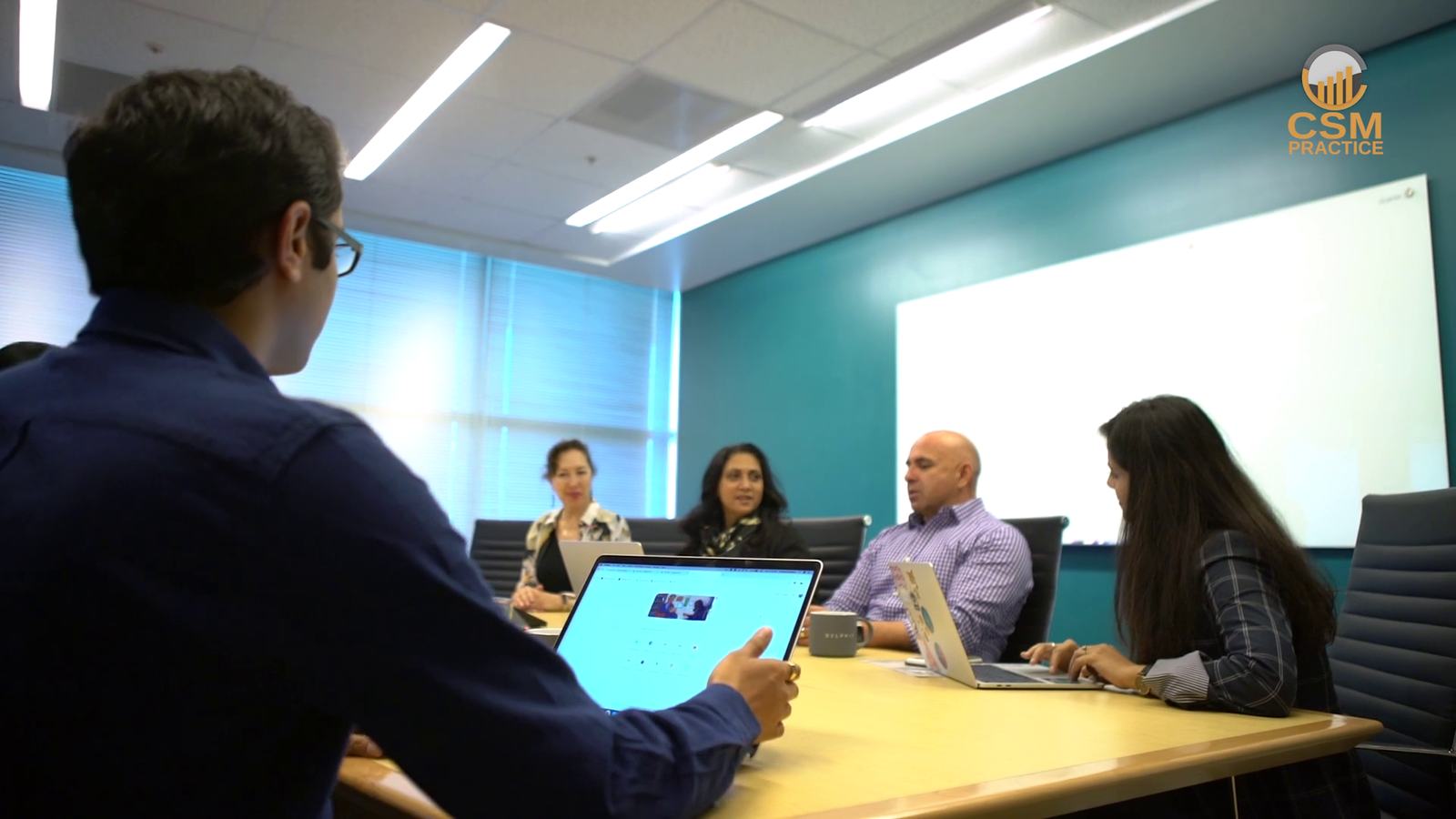
Irit Eizips leading a working session with a client team around a conference table
Working session with a client team

Usage and billing signals flag renewal risk 60–90 days out. Personalized outreach and right-sized offers, like an annual switch or a plan change, land before the date.

Seat limits, usage caps, team invites and feature hits trigger timed upgrade offers. Bigger deals go to your sales team as qualified pipeline.

Falling logins, a departed power user or a stalled team trigger a play matched to the cause: a welcome for the new admin, a value recap built from their own usage, or a hand-off to your team when the account is worth a conversation.

The floor under everything else: retry timing by decline type, card-update links, and pause or downgrade offers at the cancel button. It matters more than it looks: Paddle puts involuntary churn at typically 20–40% of all churn, especially for card payments.

Paddle, Five strategies to reduce churn in SaaS

Next module: Activate. Once Renew & Expand is running and measured, we move upstream to trial-to-paid and first-value activation.

The beta pilot

One segment. 60–90 days. An NRR number your board will trust.

We're currently opening spots to beta clients only. We'd rather run a few pilots properly than many loosely.

Scope
One long-tail segment: usually upcoming renewals plus expansion signals, with payment recovery as the floor.
Length
60–90 days from data access to first read-out.
Measurement
Agreed baseline and a holdout group, set up before anything launches.
Commercials
A paid pilot, with part of the fee tied to the lift we measure against the holdout. Terms are set on the call, based on your volume.
Your side
A sponsor from the revenue team (CRO, VP Growth or CFO), read access to billing, CRM and product data, and someone to approve customer-facing copy.
After
If the numbers hold, the pilot rolls into a monthly program, reported in retained and expansion ARR.

Usually a fit

  • Subscription software: PLG, prosumer or B2B2C
  • Roughly $10M–$100M ARR
  • Thousands of paying accounts, far more than your CSM team can cover
  • Annual plans, seats or usage tiers to renew and expand into
  • Enough signups and renewals to measure lift in weeks
  • No in-house lifecycle or AI operations team, or one stretched thin keeping DIY agents running

Usually not a fit

  • A few hundred enterprise accounts, all high-touch
  • Under $10M ARR, or pre product-market fit
  • No access to billing or usage data
  • One flat monthly plan with nothing to upgrade to
See if you qualify →
Who you'd be working with

Twelve years fixing post-sale revenue. Now we run it for you.

Irit Eizips founded CSM Practice in 2014 as a firm dedicated to post-sale revenue: renewals, expansion and retention. She has designed and rebuilt the post-sale function at more than 100 B2B SaaS and enterprise software companies, from first-CS-hire startups to SAP.

Before that she was on Gainsight's early team, running executive discovery with about 200 leaders on churn, adoption and expansion while the customer success category took shape. Earlier work in data warehouse architecture and BI means she reads the data model, not just the dashboard.

The managed program is the next step: the same playbooks, now built, run and measured by our team so yours can spend its time with customers.

100+SaaS and software companies advised
2014CSM Practice founded
200executives interviewed on churn and expansion at Gainsight

CX Hall of Fame inductee · Top Customer Success Strategist of the Year, IAOTP 2024 · Judge, Customer Success Excellence Awards · Host, The Customer Success Podcast (135 episodes)

Irit Eizips, founder and CEO of CSM Practice
Irit EizipsFounder & CEO
What clients say
CSM Practice was the unbiased third party we needed to get a frank assessment of what we did well and where there were gaps in our strategy.
SCSandra CasheChief Customer Officer, Veriforce
Top notch consultants tell you what to do, but CSM Practice tells you how to put it into practice too.
JFJohn FakatselisCOO, Accent Technologies
We immediately saw a difference in how receptive customers were to the value CSMs bring to their business.
NRVP of Customer SuccessNew Relic

Quotes are from CSM Practice consulting engagements. The managed Renew & Expand program is new; beta pilots will produce its first published results.

Questions executives ask first

FAQ

Is this software, or a service?
A managed service. We use proven platforms plus our own internal tooling to build and run the program. You don't buy seats, and you don't hire anyone to operate it.
Will AI talk to my customers without oversight?
No. Your team approves every customer-facing message and offer before it ships. We use plain rules wherever they're safer, AI only where it adds measurable lift, and every play has a kill switch.
Our team could build this with AI. Why hire you?
They probably could, and some already have. Building is now the cheap part. Running it is the expensive part. SaaStr built its own AI VP of Customer Success and says its agents “require daily attention”; its Salesforce integration disconnected twice in the first week. Integrations change, prompts drift, offers go untested, and nobody can tell the CFO what it earned. We own that work, so your team can spend its time with customers. If you've already built something, we'll take it over.
Won't this step on my sales team?
No. You set the account-size line. Below it, we run the plays. Above it, expansion signals go to your reps as qualified pipeline, logged in your CRM.
How is this different from AI for customer success?
CS tools make your CSMs faster on the accounts they already cover. We cover the accounts they don't, and we're measured on revenue, not hours saved.
How do you prove the results are real?
Before launch we agree a baseline and hold out a random group of accounts that gets nothing new. We report the difference between the two groups in retained and expansion ARR.
What does it cost?
The beta pilot is paid, and part of the fee is tied to the lift we measure. Terms depend on your account and transaction volume, so we set them on the strategy call rather than publish a price list.
Which systems do you work with?
We plug into the billing, CRM, product analytics and messaging tools you already use, and confirm the fit for your stack during qualification.
Why not just buy a tool?
Tools are part of the answer, and we may use one. What's usually missing is the person who configures, tests, tunes and reports on it every week. That's the part we own.
Beta pilot application

See if your company qualifies.

Seven quick questions, about two minutes. We only take on pilots where we can measure a real result.

  1. Answer the questions. Volume, model, and which leak hurts most.
  2. Get an instant read on whether you look like a fit.
  3. Book a strategy call. Qualified companies get a direct link to Irit's calendar.

Not ready to apply? Book a strategy call instead.

CSM Practice© 2026 CSM Practice · csmpractice.com